
“An Israeli company has launched a lab-grown milk startup, while some companies in India are entering the field of producing milk without cows. They consider this factory-produced milk to be better for the planet, humans, livestock, and the climate. They state, ‘We are reinventing the meaning of the traditional dairy and food industry by producing India’s first animal-free milk protein and dairy products (certainly a world’s first A2 milk protein) using bioengineering the microbes & precision fermentation.’
The question arises: will lab-grown milk be able to displace animal-produced milk from the market in a country like India, where livestock-based milk production and agriculture form the backbone of the rural economy? Perhaps this won’t be possible.
First, let’s understand: What is Lab-Grown Milk?“
Lab-Grown Cow-Free Milk is an exciting development in food science. It promises to be a fantastic alternative for people who love the taste of milk but want to avoid animal products for ethical or environmental reasons. However, despite its potential, this new milk is highly unlikely to replace Traditional Dairy Milk completely in the near future.
What is Lab-Grown Cow-Free Milk?
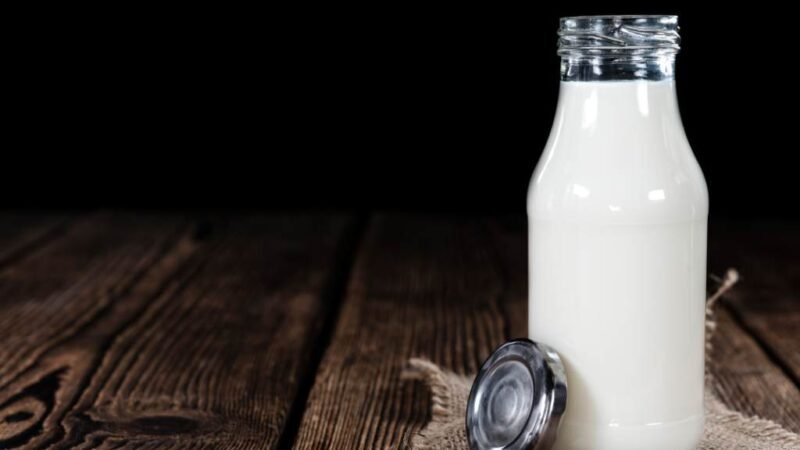
Lab-Grown Milk is also known as Animal-Free Dairy. The key difference is that it doesn’t come from cows; it’s made using microbes in a lab.
More Read

- Production Method: Scientists take the DNA code for the key milk proteins (like Whey and Casein) and insert it into microorganisms (usually yeast or bacteria). These microbes are then fed sugar and placed in large tanks (Bioreactors). The process, called Precision Fermentation, instructs the microbes to produce the exact same dairy proteins.
- Result: The resulting pure protein is blended with water, plant-based fats, and nutrients to create a liquid that has the taste, texture, and nutritional value of real milk, but is naturally lactose-free and animal-free.
Traditional Milk: The Natural Product
Traditional milk is what we have been getting from cows, buffaloes, or other dairy animals for centuries.
- Production Method: Raising animals, feeding them, and milking them. This process is natural and forms a crucial part of the rural economy worldwide.
- Benefits: It is a complete food, is widely available, affordable, and provides a direct source of income for millions of farmers.
Why Lab-Grown Milk Can’t Take Over in India
India has consistently retained its position as the world’s leading milk producer, contributing nearly one-fourth of global output. Over the last 11 years, India’s dairy sector has expanded significantly by 70 percent, contributing around 5 percent of the national economy and providing direct employment to over 8 crore farmers (as per the National Accounts Statistics). Furthermore, Women farmers play a significant role in production and collection, making dairy a strong vehicle for inclusive and gender-responsive growth.
Even though lab-grown milk holds great promise, it faces several practical hurdles that prevent it from completely replacing traditional dairy milk anytime soon:

1. The Immense Challenge of Scale and Cost
- Scaling Up: Global milk consumption is massive, measured in billions of liters. For lab-grown milk to match this scale, it would require building thousands of new, expensive Bioreactor factories and establishing entirely new industrial facilities. This is a massive, decades-long undertaking.
- High Production Cost: The precision fermentation and protein purification process is currently much more expensive than traditional milking. Until costs drop significantly, lab-grown milk will remain a premium product, making it unaffordable for the general population, especially in developing countries like India.
2. Impact on the Rural Economy
Source of Livelihood: Millions of small farmers and landless laborers depend directly on livestock for their income and livelihood. Dairy farming acts as an economic safety net for farmers when crops fail.
Agricultural Integration: Livestock provides essential natural manure (fertilizer) for crops and animal power (bulls) for plowing and transportation in many areas. Lab-grown milk offers no such agricultural benefits.
3. Regulatory and Acceptance Issues
- Government Approval: Because lab-grown milk is a novel food, it requires long and rigorous regulatory approval from food safety agencies (like the FDA or FSSAI) worldwide before it can be widely sold.
- Consumer Trust: Many consumers, especially in established markets, are hesitant to trust products labeled “lab-grown” or “bio-engineered.” Overcoming this psychological barrier and building trust is a slow process.
4. Complexity of Nutrition
- Completeness: Traditional milk is a natural food containing a complex blend of hundreds of naturally occurring nutrients, vitamins, and bioactive compounds. Lab-grown milk only focuses on replicating the major proteins and fats. It may struggle to fully replicate the complete complexity and natural balance of dairy milk.
Lab-Grown Cow-Free Milk is not a replacement for traditional milk, but rather a supplement.
In the future, it will provide a sustainable, ethical, and lactose-free choice for consumers who can afford it and are environmentally conscious.
However, due to its current high cost, the sheer scale of the global dairy market, and its crucial role in supporting the rural economy, Traditional Dairy Milk will continue to be the main source of milk for global consumption for many decades to come.