
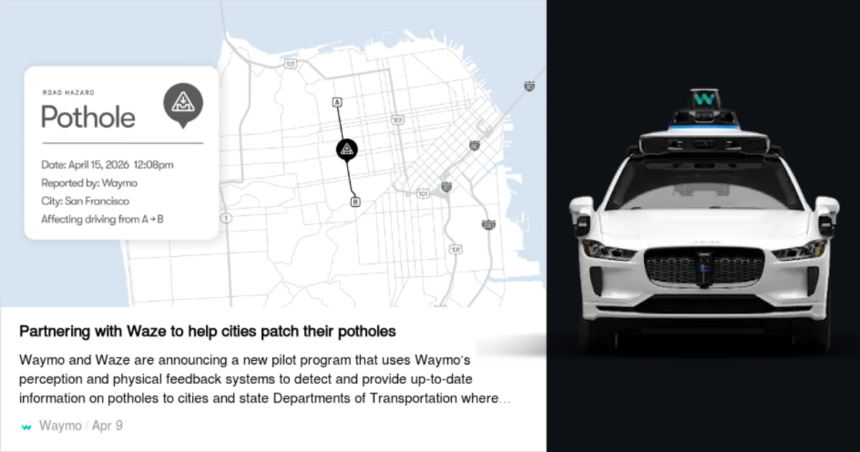
The pilot leverages the sophisticated hardware integrated into Waymo’s autonomous fleet. As these vehicles navigate city streets, their perception and physical feedback systems automatically detect dips and imperfections in the road surface.
This data is then streamed to the Waze for Cities platform—a free-to-use resource for government agencies. By merging Waymo’s automated sensor data with traditional user-reported information, local Departments of Transportation (DOTs) gain a comprehensive, real-time map of road conditions.
Benefits for Road Users
The collaboration doesn’t just help city planners; it directly protects everyday drivers, cyclists, and pedestrians:
Waze users in participating cities will see Waymo-identified potholes on their navigation maps, allowing them to avoid potential vehicle damage.
Just like other Waze features, users can “thumbs up” or verify the presence of a pothole, ensuring the data remains accurate and up-to-date.
Traditionally, cities rely on manual inspections or resident complaints (311 calls). This often leads to an incomplete picture of road health. Automated reporting ensures that even less-traveled streets get the attention they need.
Initial Rollout: The “First Five”
The pilot is launching in the five major metropolitan areas where Waymo’s commercial operations are most prominent: San Francisco Bay Area, Los Angeles, Phoenix, Austin, Atlanta
Waymo has already identified approximately 500 potholes across these regions during the preliminary testing phase.
Voices from the Field
San Jose Mayor Matt Mahan praised the initiative, stating: “As Waymo’s autonomous fleet travels across San Jose, we appreciate this collaboration. Technology helps us identify issues like potholes faster so we can respond more efficiently.”
Arielle Fleisher, Policy Development and Research Manager at Waymo, emphasized the company’s civic responsibility: “Waymo’s mission is to be the world’s most trusted driver; we’re also committed to becoming a trusted partner to the cities we serve.”
Sarah Kaufman, Director of the NYU Rudin Center for Transportation, noted that this reflects a “good neighbor principle,” where companies using public streets actively contribute to improving them.
The Road Ahead
Looking forward, Waymo and Waze plan to expand the program to cities experiencing harsh winter weather, where “freeze-thaw” cycles create rapid and severe road deterioration. By turning autonomous vehicles into mobile infrastructure inspectors, the two companies are proving that the benefits of self-driving tech extend far beyond just the passengers inside the car.
For more updates on this journey, follow the official Waymo’s blog.