Google Launches ‘Workspace Studio’: AI Agents Now Available for Every Employee, No Coding Required

Tech News, 04 December, 2025: Google has officially announced the general availability of Workspace Studio, a groundbreaking platform within its Google Workspace suite. The new Studio is designed to democratize Artificial Intelligence (AI) automation, shifting its power from specialized developers to every business user.
Workspace Studio is the central hub for users to design, manage, and share AI agents—intelligent, custom-built software tools that automate both mundane and complex office tasks.
Powered by Gemini 3: Agents that Reason and Adapt
These new agents are fueled by Google’s advanced Gemini 3 model, granting them flexibility and intelligence far beyond traditional, rigid, rule-based automation.
Key Features and Capabilities:
- Intelligent Automation: Agents move beyond simple rules by utilizing reasoning and adaptation capabilities. They can handle complex workflows such as intelligent prioritization, support issue triage, smart approvals, content generation, and sentiment analysis.
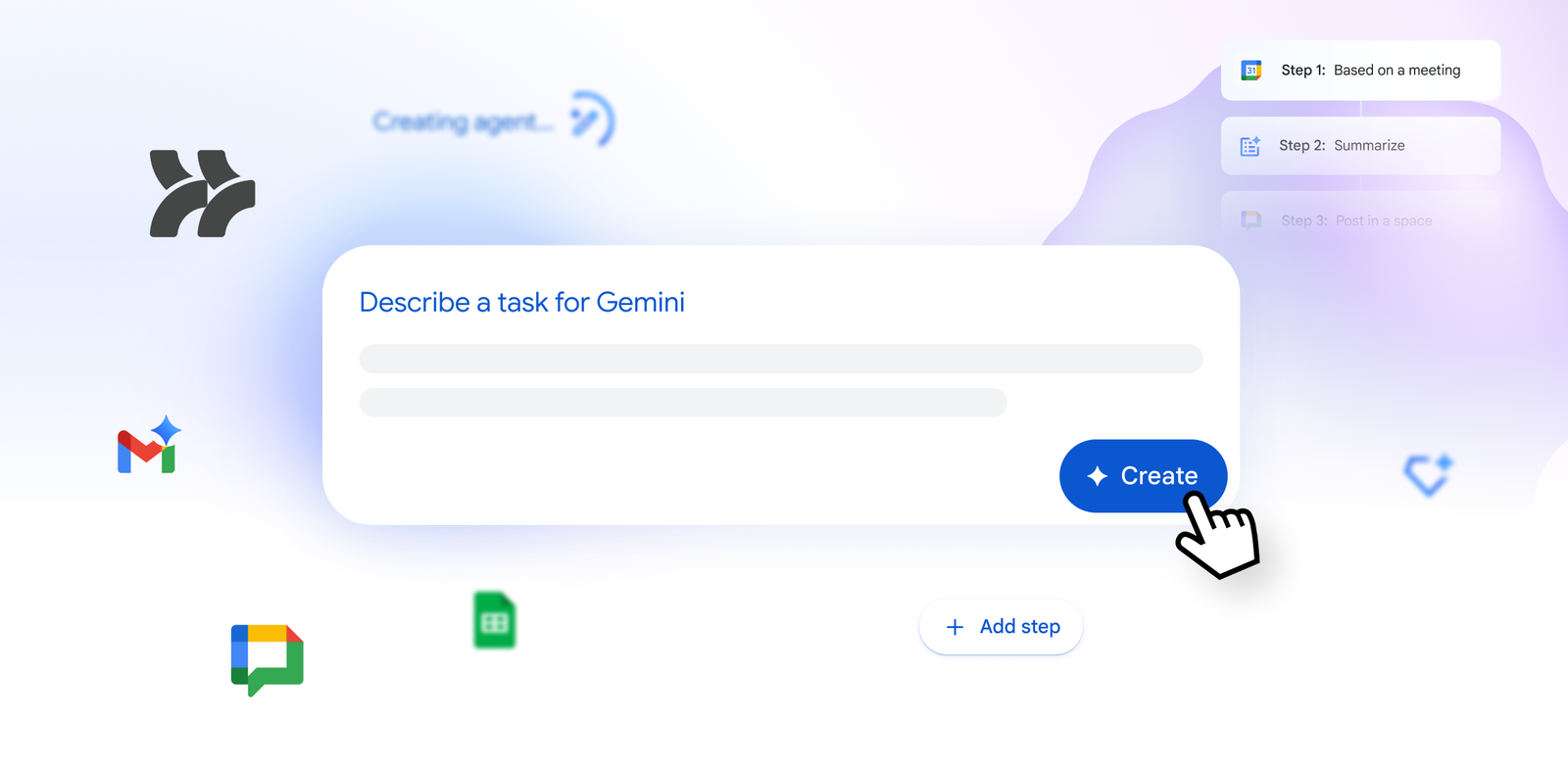
- No-Code Creation: Users can now build custom agents in minutes simply by describing the automation they want in plain language (e.g., “Every Friday, ping me to update my tracker”), and Gemini will create the agent instantly.
- Contextual Smarts: Deeply integrated with Workspace apps (Gmail, Drive, Sheets, Chat), agents can automatically pull relevant context from documents and emails, allowing them to provide smarter, personalized answers and take informed actions.
- Seamless Integration: The agents can connect to popular third-party business platforms like Asana, Jira, Mailchimp, and Salesforce, enabling automation across the user’s entire digital toolset.
Share, Scale, and Extend
The platform strongly emphasizes collaboration and customisation:
- Templates for Quick Start: A library of zero-configuration templates is available for common use cases, such as getting a daily summary of unread emails or labeling emails with action items.
- Easy Sharing: Agents can be shared with team members as easily as sharing a Google Doc, making it simple to scale powerful automations across the entire organization.
- Advanced Extension: For technical needs, users can build custom steps using Apps Script to integrate with proprietary internal tools, or use webhooks to connect to virtually any external service.
The launch of Workspace Studio signals Google’s commitment to ushering in an era where AI agents become the core mechanism for productivity, helping organizations shift time away from routine, administrative work and toward high-value creation.