
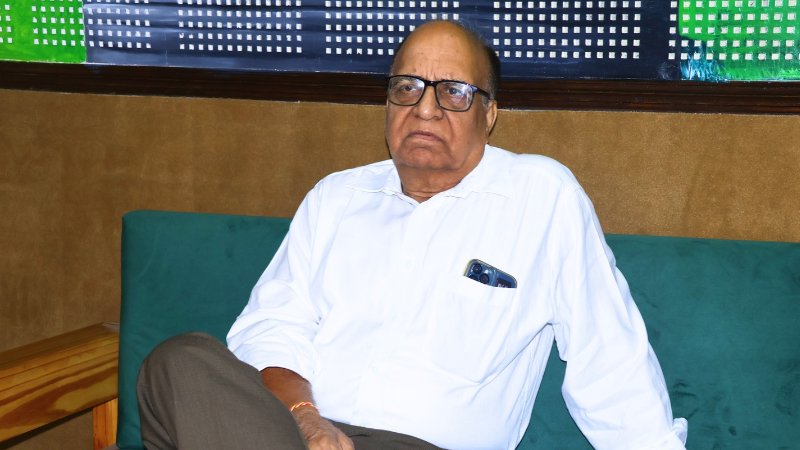
Dehradun, 07 November, 2026: A school classroom is far more than four walls and rows of desks; it is where young minds, unique talents, and diverse dreams grow together. Yet, in the rush to finish the syllabus and score high marks, education often gets reduced to mere rote memorization. Insights shared by Prof. (Dr.) N. K. Chadha, former Head of the Department of Psychology at the University of Delhi, during a discussion on Radio Kedar, highlight how classroom teaching practices, meaningful teacher-student relationships, and early career awareness can positively shape a student’s future.
The Teacher: The First Natural Career Guide
Many believe that career counseling is relevant only after Grade 12 or that it must come exclusively from specialized counselors. While professional counselors have their distinct expertise, the classroom teacher who interacts with students daily understands their strengths, behavioral nuances, and challenges best. When an educator pays attention to an individual student’s needs, it builds trust and confidence, enabling the child to share personal difficulties and career aspirations without hesitation.
Moving Past Rote Learning: Practical Application Over Memorization
Classroom subjects become tedious when teaching is limited strictly to facts and formulas without demonstrating their real-world relevance. Giving students the freedom to think, explore, and answer in their own words fosters authentic creativity based on four key pillars:
- Expressing Ideas Freely (Fluency): Encouraging students to voice their thoughts without fear or hesitation.
- Flexible Thinking: Helping children explore multiple perspectives rather than getting stuck on a single idea.
- Originality: Appreciating out-of-the-box approaches instead of discouraging unconventional answers.
- Connecting Knowledge (Elaboration): Guiding learners to apply concepts learned in one area to entirely different situations.
Students should feel empowered to ask questions openly. No matter how unconventional a query may seem, encouraging the courage to ask questions helps remove the fear of peer judgment.
Classroom Seating Rotation: Erasing the ‘Backbencher’ Label
Seating habits can quietly limit a child’s social and intellectual growth, especially when a few students stay glued to the back corners all year long. A simple, effective practice is periodic seating rotation. By rotating desks regularly, the concept of a permanent “backbencher” disappears. Every child gets an opportunity to sit in the front, center, and alongside different peers, making it easier for quieter students to participate and build teamwork.
The Teacher-Student Bond: The Value of Empathy
An impactful educator is one who avoids artificial emotional distance. When teachers demonstrate that they are accessible guides rather than strict evaluators, students develop genuine trust. In modern times, with smaller families and busy working parents, the steady empathy and support of a teacher serve as an essential emotional anchor for a young person.
Balancing Homework: Allowing Time to Think
Repetitive, excessive homework creates unnecessary stress without adding measurable educational value. Homework should be minimal, practical, and purposeful. Children need uninterrupted personal time in the evening to play, pursue hobbies, and think independently, as unstructured time is vital for genuine mental development.
Careers in Psychology: Far Beyond Clinical Practice
Studying psychology after Grade 12 is not confined to clinical practice or hospital setups. The behavioral sciences offer expansive, dynamic career avenues across numerous sectors:
Corporate HR and Organizational Behavior: Managing talent acquisition, skill-matching, and workplace wellness in major enterprises.
Defense and Applied Research: Assisting in personnel selection, behavioral assessment, and resilience training for organizations like DRDO and defense boards.
Sports Psychology: Helping athletes regulate performance stress, maintain focus, and build mental stamina.
Road Safety and Policy Research: Studying driving patterns and public behavior to improve transit policies and safety frameworks at research institutes like CRRI.
True education bridges the gap between textbooks and daily life. When classrooms prioritize empathy and genuine curiosity over fear and pressure, students develop into confident, self-reliant individuals ready to navigate the future.