
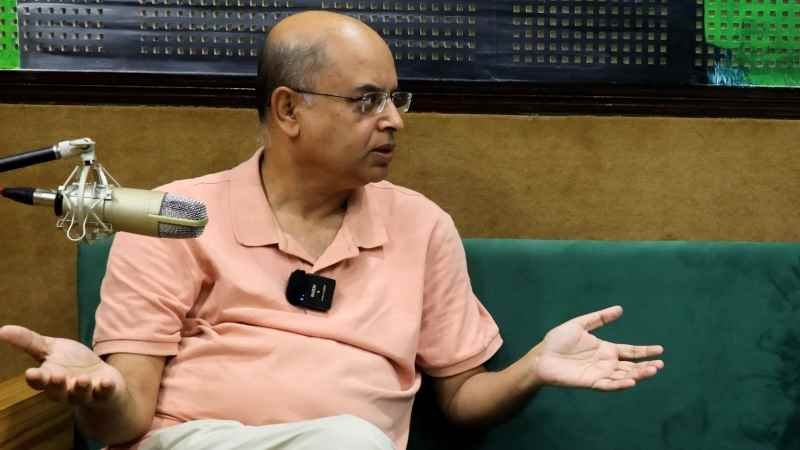
Dehradun: In a special dialogue broadcast on the ‘Radio Kedar’ hosted by Rajesh Pandey, renowned senior Rheumatologist, and Clinical Immunologist Dr. Rajiva Gupta—Chairman, Department of Clinical Immunology and Rheumatology at Medanta – The Medicity, Gurugram, and Vice President of Manava Bharati Society, Dehradun—shared comprehensive clinical perspectives on autoimmune diseases, rational drug usage, ground realities of the healthcare ecosystem, and career avenues for upcoming medical aspirants.
Dr. Rajiva Gupta, completed his MBBS from Patna Medical College, followed by an MD from Maulana Azad Medical College, and served as faculty at the All India Institute of Medical Sciences (AIIMS), New Delhi. Following his tenure at AIIMS, he underwent years of advanced clinical training in the United Kingdom before returning to India.
The Clinical Journey and Establishing Super-Specialties in India
In the conversation broadcast on Radio Kedar, Dr. Rajiva Gupta noted that medical education conventionally follows an MBBS degree followed by an MD, which he completed at Maulana Azad Medical College. However, upon joining AIIMS New Delhi as a Senior Resident, he realized that vital subspecialties had not yet matured within India. Recognising that this discipline is an integral facet of internal medicine tied to widespread clinical conditions, he committed himself to clinical immunology and rheumatology starting in 1994.
Dr. Gupta explained that the human body regulates all its organs through specific hormones and biochemical substances that either stimulate or suppress the immune system. Under normal physiological conditions, this delicate equilibrium is securely maintained. However, when this fine balance dysregulates, immune cells turn hyperactive.
Rheumatoid Arthritis and Autoimmune Diseases: Beyond Joint Pain
Dr. Gupta clarified that illnesses such as Rheumatoid Arthritis (RA) and Systemic Lupus Erythematosus (SLE) are fundamentally autoimmune disorders. While the layperson commonly terms RA as ordinary gathiya (joint pain)—often consulting a clinician only due to physical pain—the musculoskeletal system represents merely one target organ. When immune cells turn hyperactive, they impact multiple organs, including the lungs, heart, eyes, kidneys, and salivary glands.
More Read

Reflecting on the 1990s, he recalled that patients with arthritis moved back and forth between orthopedicians, general physicians, and paramedics, with the prevailing belief being that the illness was untreatable. During that era, systemic manifestations—such as pulmonary fibrosis and accelerated heart disease—often went unrecognized.
To gain broader global experience, Dr. Gupta moved to the UK in 1997 after completing his residency. After 4–5 years of intensive clinical training, he returned to AIIMS in 2001 as faculty, where he and a few colleagues set up and advanced the Department of Clinical Immunology and Rheumatology. Later, he moved to Medanta to lead the specialty.
He highlighted that immune mechanisms drive a vast range of post-infectious and inflammatory disorders:

Malaria and Typhoid: Following primary infection, autoimmune cascades can provoke systemic complications. In typhoid, post-recovery complications often stem from an overactive immune response.
The COVID-19 Paradigm: COVID-19 was primarily an acute viral infection where the virus exited the body within 5 to 7 days. However, the subsequent hyperactive immune cascade caused self-directed cellular damage, leading to severe pulmonary fibrosis and respiratory distress.
Conditions such as lupus, scleroderma, myositis, dermatomyositis, peripheral neuropathies, interstitial lung disease (ILD), and lupus nephritis all stem from related immune mechanisms. When pulmonologists observe that respiratory distress is accompanied by multi-system involvement, immune-mediated mechanisms are often at play. Rheumatology centers specifically on rheumatic discomfort, and arthritis comprises more than 100 distinct clinical variants.
With a population of 140 crore, approximately 1% of people in India suffer from rheumatoid arthritis, equating to roughly 1.4 crore patients. These individuals require regular follow-up every 3 to 6 months. In contrast, fewer than 3,000 trained rheumatologists practice across the entire nation. This immense gap creates long appointment waiting times at major tertiary care centers. At Medanta, alongside clinical duties, Dr. Gupta trains DM and DNB super-specialty residents, training two candidates annually with six fellows active at any given time.
Motivation to Specialize and the Importance of Early Intervention
Dr. Gupta explained that clinicians naturally seek intellectual and clinical challenges. Multi-system diseases raise that complexity. Immunology provides deep insights into cellular pathology—such as understanding how lymphocyte and B-cell hyperactivity causes tissue destruction, which can be mitigated with targeted therapies.
In earlier times, arthritis led to severe deformities, forcing patients to walk with twisted limbs. Dr. Gupta affirmed that if patients consult an expert during the early stages, a lifetime of normal functional health can be ensured; however, damaged tissue cannot be reversed. For example, when a stethoscope placed over a rheumatoid patient’s chest detects crepitations, the individual often mistakes it for asthma, unaware that it is lung fibrosis caused by autoimmune arthritis. Regulating the immune pathway simultaneously protects the joints, lungs, and heart.
Painkillers: “Useful Poisons” and the Perils of Polypharmacy
Dr. Gupta expressed strong concern regarding the common practice in India of buying over-the-counter painkillers. Defining pharmacotherapy, he remarked:
“A medicine is a useful poison.”
It remains therapeutic only when administered by a knowledgeable clinician. Common over-the-counter anti-inflammatory analgesics such as etoricoxib or diclofenac can cause fatal complications if taken without medical supervision.
More Read

Addressing the risks of polypharmacy in senior citizens, he noted that aging often brings cardiac, pulmonary, renal, and arthritic issues concurrently. Patients consult multiple specialists, each prescribing distinct drugs, calcium supplements, vitamins, and analgesics. Many drugs share similar chemical compounds, and higher pill counts drastically elevate adverse drug-to-drug interactions.
Therefore, a primary general physician must supervise the comprehensive prescription chart. In patients with underlying cardiac conditions, continuous painkillers and non-steroidal anti-inflammatory drugs (NSAIDs) must be restricted, while in renal impairment, they are strictly contraindicated.
Healthcare Systems, Time Pressures, and Digitizing Medical Records
Contrasting his clinical experiences in the UK with India, Dr. Gupta observed that within the UK’s National Health Service (NHS), a specialist typically reviews around 5 patients a day, dedicating roughly 30 minutes to each case. The system incorporates dedicated teams of paramedics, counselors, physiotherapists, and occupational therapists, with healthcare covered without direct charges at the point of care.
In India, clinical demand is immense. An active practitioner regularly consults 40 or more patients in an 8-hour day, leaving minimal time per consultation. High patient footfall and queues at renowned clinics create intense time constraints for both doctors and patients.
Dr. Gupta strongly advocated for digitizing outpatient (OPD) documentation. While inpatient files are legally archived, paper prescriptions from outpatient visits are frequently misplaced by patients due to relocation or environmental incidents. Corporate tertiary centers utilize Hospital Information Systems (HIS) linked to Unique Hospital Identification (UHID) numbers to retrieve historical records instantly. Government initiatives moving toward digital health IDs and typed prescriptions will prevent handwritten dispensing errors. Furthermore, laboratory standardization via NABH accreditation is crucial to eliminate divergent test results across centers.
Uric Acid, Gout, and Dietary Misconceptions
Addressing the widespread tendency to blame all joint discomfort on uric acid and cut out dietary protein, Dr. Gupta clarified:
Joint pain is not uniformly caused by uric acid. The specific arthritis triggered by uric acid crystal deposition is known as Gout, which requires an entirely different therapeutic protocol.
Elevated uric acid alone, without typical acute symptoms, does not establish a diagnosis of gout.
Serum uric acid levels naturally rise with age. Women exhibit lower levels prior to menopause due to hormonal excretion pathways, whereas men show higher baselines, often slightly elevated among individuals engaged in intense cognitive work.
Elevated uric acid frequently serves as a metabolic marker reflecting obesity, diabetes, and cardiovascular risks (Metabolic Syndrome) rather than isolated joint pathology.
Can Children and Adolescents Suffer from Arthritis?
Dr. Gupta affirmed that autoimmune inflammatory arthritis can manifest at any age:
No Age Barrier: It can occur in infants as young as 6 months (neonatal onset) through to old age.
Juvenile Idiopathic Arthritis (JIA): Arthritis occurring below 16 years of age falls under JIA, handled by dedicated pediatric rheumatologists who monitor physical, hormonal, and developmental milestones.
Osteoarthritis vs. Inflammatory Arthritis: Age-related wear and tear in elderly joints constitutes Osteoarthritis (such as degenerated knees). Conversely, Inflammatory Arthritis features sudden swelling, warmth, joint stiffness, and severe limitation of motion upon waking.
Advice for Parents: If a child limps, avoids school due to joint discomfort, or experiences morning stiffness, parents should not write it off as a simple play injury. Prompt assessment ensures that pediatric patients lead an active, normal life.
Regarding medical costs, therapies range from affordable daily tablets costing 2 to 10 rupees to advanced biologics priced up to 1 lakh rupees per dose. An empathetic clinician adjusts prescriptions to match the patient’s financial realities, noting that older therapeutic molecules drop significantly in cost over time.
Inflammatory Back Pain in Young Adults: Ankylosing Spondylitis and HLA-B27
Distinguishing mechanical backache from Ankylosing Spondylitis (AS), Dr. Gupta noted:
It is an inflammatory spinal disease predominantly affecting young adults aged 16 to 20.
It presents with pronounced early-morning spinal and buttock stiffness lasting an hour or more, which gradually eases with movement and warm showers. Peripheral joints (knees, ankles) and recurrent eye inflammation (redness) can also occur.
The illness displays familial patterns, often correlated with the HLA-B27 genetic marker.
Debunking the Gene Myth: Testing positive for HLA-B27 does not automatically mean a person has arthritis. Roughly 6% to 8% of the healthy, asymptomatic Indian population carries this gene without ever developing joint disease. Clinical evaluation alongside radiographic imaging is required, and timely medical intervention controls the disease completely, preventing permanent spinal fusion.
Treatment Compliance and Telemedicine Outreach
Dr. Gupta stressed that treatment non-compliance is the primary cause of clinical failure in rheumatology. Because autoimmune disorders are managed rather than cured outright, long-term adherence to prescribed therapy is vital.
In rural regions, financial hardship often causes treatment discontinuation, particularly among female patients. He urged patients facing financial constraints to communicate openly with their doctor so that cost-effective alternative drugs can be selected rather than stopping treatment entirely.
To bridge geographic barriers, he advocated for telemedicine and video consultations. Given the scarcity of rheumatologists in smaller towns, radio dialogues and remote clinical channels provide essential expert guidance.
Clinical Demands and the “A-B-C” Rule for Medical Practitioners
Speaking on his daily routine, Dr. Gupta shared that he leaves home by 8:30 AM and returns past 6:30 or 7:00 PM. Due to heavy outpatient loads at Medanta, clinicians frequently work through lunch breaks, relying on occasional tea to keep going. Nevertheless, he sets aside Sundays for rest and morning walks, emphasizing that personal downtime is essential to prevent professional burnout.
Regarding reports that doctors often interrupt patients within 9 to 11 seconds, Dr. Gupta acknowledged that time pressure can necessitate steering discussions back to relevant points, but urged clinicians to do so with polite empathy.
For young doctors and medical students, he outlined the ‘A-B-C’ Rule of clinical excellence:
A – Availability: Giving unhurried time to patients and listening carefully to their narrative before writing prescriptions.
B – Behavior: Maintaining an empathetic, humble, and patient approach toward the patient.
C – Competence: Striving to be a ‘safe doctor’ who recognizes clinical boundaries, seeks peer counsel when needed, and avoids prescribing redundant medications.
The Future of Career Opportunities in Rheumatology
Addressing career paths for medical graduates, Dr. Gupta stated that the horizons for rheumatology and clinical immunology are exceptionally bright.
While past generations clustered around cardiology, top rankers in the NEET Super Specialty (NEET-SS) examinations are now actively prioritizing rheumatology. With an estimated 1.4 crore patients and fewer than 3,000 specialists, the supply-demand deficit is immense. Furthermore, ongoing molecular research and new biologic therapies make it one of the most dynamic, rapidly evolving domains in modern medicine.
The broadcast on Radio Kedar reinforced that patient awareness, early diagnostic evaluation, disciplined therapeutic compliance, and compassionate doctor-patient communication form the foundation of public health and healing.